
The Inspection Is Not the Hard Part. The Follow Through Is.

In condo and homeowner association management, regular inspections of a property’s common areas play an important role in preserving both property value and the day‑to‑day living experience for residents and owners.
Inspections help managers and boards identify issues early, create a record of what was observed, and develop a clearer understanding of the condition of the property.
But for most teams, the inspection itself is not where the real operational burden begins.
The real complexity starts after the findings are captured, when those observations need to turn into action.
Post‑inspection follow‑through is where the work often becomes more manual, more fragmented, and harder to manage consistently.
Inspections are useful, but they are only the starting point
Inspections give managers and boards a useful snapshot of the condition of the property and the issues that need attention. But they are still only the starting point.
The harder part begins when findings need to move from observation into action.
Some items can be addressed quickly by on‑site staff. Others require vendor coordination, quotes, approvals, or discussion during board meetings.
Some issues need to remain visible long enough to track warranties, identify recurring patterns, or understand the root causes behind repeated problems. This is where the operational burden starts to grow.
Not every inspection item follows the same path
Not every issue identified during an inspection follows the same path.
Some can be resolved quickly by superintendents, cleaning teams, or front desk staff. Some require changes in resident behavior, which means communication, notices, and follow‑up. Other issues need specialized vendors. Some require board review, discussion, or approval. Others may simply need to be monitored over time.
This variation is what makes post‑inspection follow‑through difficult to manage consistently over time.
Why inspection follow‑through becomes fragmented
Issues are captured during the inspection, but the follow‑through often happens somewhere else.
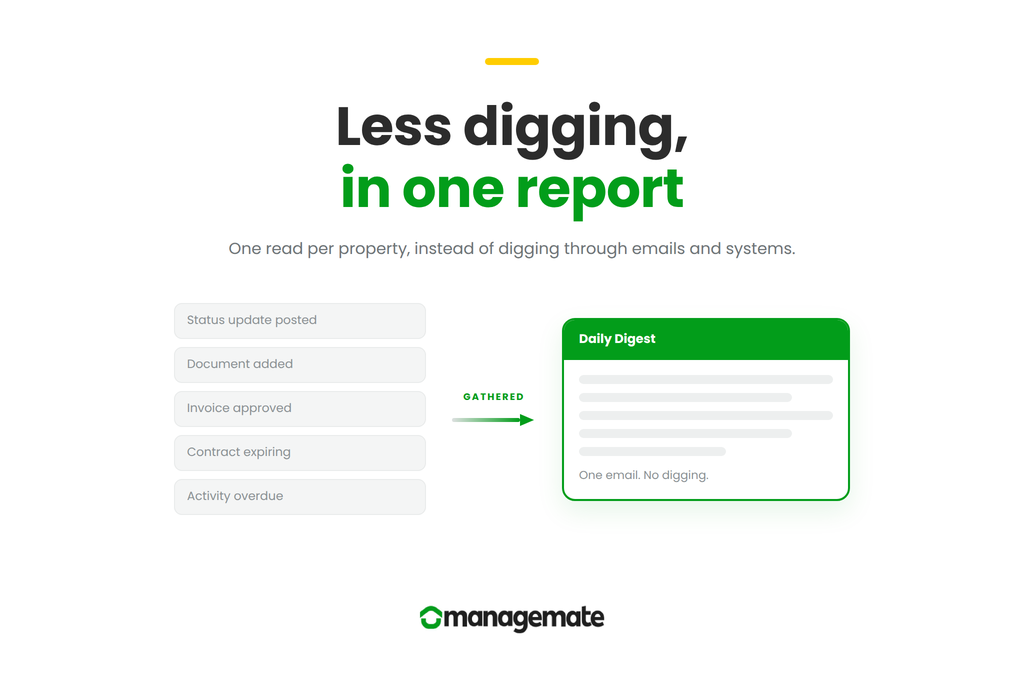
Information collected during inspections ends up spread across devices, emails, attachments, spreadsheets, accounting systems, reports, meeting minutes, and informal follow‑ups.
Overtime, it becomes harder for managers, boards, and staff to clearly see the status of issues, what has already been done, and what still needs to happen.
This is where visibility starts to fade after the inspection is complete.
What gets lost when follow‑through is difficult to track
When follow‑through is hard to manage, work starts to slip.
Required repairs and communications can be delayed or missed. Updates may appear in one manager report or board meeting, only to disappear from the next.
When managers or staff change, important context often needs to be re‑explained. Boards are left with the familiar feeling of, “didn’t we already talk about this?”
Overtime, warranties, recurring issues, and broader maintenance patterns become harder to track using traditional tools like PDF reports, emails, spreadsheets, and file folders.
How to achieve better follow‑through and post‑inspection visibility
Better post‑inspection visibility does not start by replacing the software or systems a management company or board already uses.
It starts by understanding the current process for conducting inspections and following through on issues. That means identifying where bottlenecks occur, where work slows down, and where issues tend to get dropped.
Once the existing process is clearly understood, gaps can be addressed using existing tools or targeted additions, without making wholesale changes.
The objective should be to make findings, status, and next steps easy to see after the inspection is complete.
When that happens, managers and boards can quickly understand what was found, what has been addressed, what remains open, and what needs attention next.
That is where the real value of an inspection lies. It should not just be a record of what was observed, but a clear path to maintaining the property’s value and quality of life.
Understand Our Workflow. Click here to book a 15-minute discovery call today.

See Managemate with your properties in mind
Tell Salim, Managemate’s founder, how your team tracks work and reports to boards today. He’ll show you how Managemate would fit your portfolio, team and existing systems.